Ashwagandha for Sleep and Anxiety: What to Know
Ashwagandha is an adaptogen traditionally used for stress — and its calming effect on sleep may be more indirect than people expect.
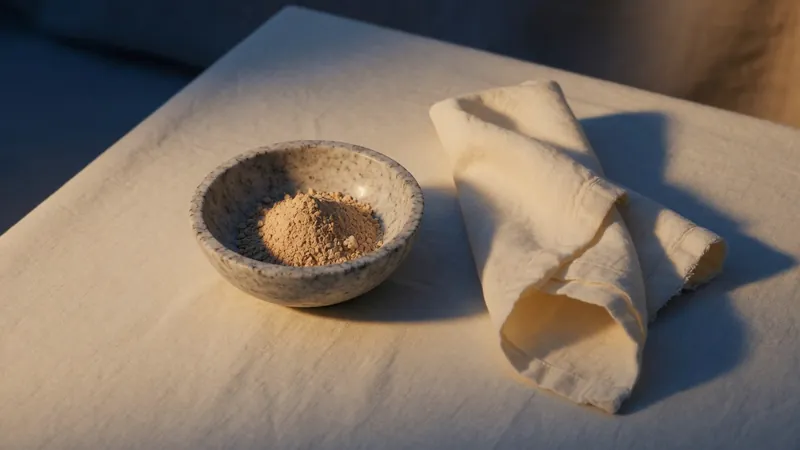
Ashwagandha is an adaptogen — an herb traditionally used to help the body handle everyday stress — and its reputation for sleep is really a reputation for calm. Ashwagandha for sleep isn't about knocking you out at night; it's more about taking the edge off a wound-up nervous system during the day, so there's less static left over when you actually try to sleep. That distinction matters more than almost anything else in this article.
What is ashwagandha, and how is it traditionally used?
Ashwagandha (Withania somnifera) is a root traditionally used in Ayurvedic practice in India for centuries, usually as a powder mixed into warm milk or water, or more recently as a capsule or extract. The name is sometimes translated loosely in a way that references rest, which is part of why it gets grouped with sleep herbs even though its traditional use was broader — stress, fatigue, and general vitality, not sleep specifically.
Today it's most commonly sold as a standardized root extract in capsule form, with root powder and tinctures also available. Extract concentrations vary a lot between products, which is one reason research results are hard to compare directly — a study using one extract doesn't necessarily say much about a different product on a different shelf.
It also belongs to a broader category herbalists call adaptogens — plants traditionally believed to help the body adapt to stress generally, rather than target one specific symptom. Rhodiola and holy basil get grouped in the same category. The term is a traditional and marketing one more than a strict scientific classification, which is worth knowing before you read too much into the label.
How are stress, anxiety, and sleep connected?
A wound-up nervous system and a restless night are closely linked, and most people already know this from experience — a stressful day makes for a worse night, and a bad night makes tomorrow's stress feel bigger. Ashwagandha's traditional use targets the first half of that loop: daytime tension, not the sleep itself directly.
That's why people describe ashwagandha as working "quietly" — less like a sedative and more like turning down the background noise so sleep has an easier time arriving on its own. If your main problem is a racing mind specifically at night rather than stress in general, it's worth reading about what's actually happening when you wake up at 3am too, since the two issues often get lumped together but respond to different things.
Key takeaway
Ashwagandha is traditionally used for stress, and any effect on sleep is likely a side effect of calmer days, not a direct sedative action at night.
When should you take ashwagandha — morning or evening?
Both are common, and it depends on why you're taking it. Some people take it in the morning as part of a daily stress-support routine, on the idea that steadier days lead to easier nights. Others take it in the evening, closer to bedtime, aiming for more of a calming effect before sleep.
There's no single traditional answer here, and most guidance is practical rather than firm:
- Morning or with breakfast, if your main goal is daytime stress
- Evening, an hour or so before bed, if you're hoping for a wind-down effect
- Consistently, at the same time each day, since adaptogens are generally described as working gradually rather than immediately
Whichever time you pick, taking it with food is commonly recommended, mostly because it's easier on the stomach than taking it on an empty one.
What does the research say about ashwagandha for sleep?
Ashwagandha is one of the more studied adaptogens, and the honest summary is: promising but incomplete. A handful of small studies have looked at ashwagandha and measures like self-reported stress, sleep quality, or how quickly people fell asleep, and several have reported modest improvements over several weeks of daily use, particularly in adults describing themselves as stressed. Other studies show smaller or no differences.
Most of these trials are short, use different extract types and doses, and involve relatively few participants — which is normal for herbal research generally, but it means nothing here counts as settled. Study doses have generally ranged from a few hundred milligrams up to around a gram of extract daily, taken for anywhere from a few weeks to a few months, which is a wide enough range that comparing "ashwagandha" across studies is a bit like comparing "coffee" without knowing the cup size.
Some studies have also looked at whether ashwagandha affects stress-hormone levels, with mixed results; that remains an open research question rather than a confirmed effect. Ashwagandha is traditionally used and generally well tolerated in the doses studied, but "well tolerated" and "proven effective" are different claims, and it's worth keeping them separate in your own head.
Who should be cautious with ashwagandha?
Ashwagandha isn't the right choice for everyone, and a few groups should talk to a doctor before starting it:
- Anyone pregnant or trying to become pregnant, since ashwagandha isn't considered appropriate for pregnancy
- People with thyroid conditions, since ashwagandha may affect thyroid hormone levels
- People with autoimmune conditions, since it may stimulate immune activity in ways that aren't well understood for every condition
- Anyone taking thyroid medication, sedatives, or immunosuppressants, because of possible interactions
- Anyone scheduled for surgery, since it's generally advised to stop several weeks beforehand
Mild stomach upset or drowsiness are the most commonly reported side effects at typical doses, and they're usually a sign to lower the dose or stop rather than push through. There have also been rare reports of liver-related issues associated with ashwagandha supplements, which is part of why starting at a modest dose and checking with a doctor first — especially if you already take other medication — is worth the extra five minutes.
What should you try tonight?
If you're curious whether ashwagandha does anything for you, treat it like a slow experiment rather than a quick fix:
- Pick one time of day — morning or evening — and stick with it for at least two to three weeks before judging.
- Start at the lower end of whatever dose is on the label, and don't stack it with other new supplements at the same time.
- Track your evenings loosely — wound-up versus calm — rather than only watching how fast you fall asleep.
- Keep the rest of your wind-down steady too, since an evening routine that lowers light and pace gives any calming effect somewhere to land.
If daytime stress feels like the bigger issue and sleep is the side effect, our overview of natural sleep aids beyond melatonin covers where ashwagandha fits next to other traditionally used herbs.
This article is general sleep education, not medical advice. If sleep problems persist, talk to your doctor.
Frequently asked questions
Does ashwagandha help you sleep, or does it just lower stress during the day?
Mostly the second one, as far as the evidence goes. Ashwagandha's traditional use and most of its research center on stress and daytime tension, not sleep directly. Any improvement in sleep is generally understood as a downstream effect of feeling calmer during the day, which is a real thing but a different mechanism than a sleep aid that acts at bedtime.
Are there side effects to taking ashwagandha?
The most commonly reported ones are mild — stomach upset, drowsiness, or headache, usually at higher doses. Less common reports include changes in thyroid function and, rarely, liver-related issues, which is part of why people with thyroid or liver conditions are advised to check with a doctor first. Stopping or lowering the dose typically resolves mild side effects.
How long does it take for ashwagandha to start working?
Most of the research that reports a benefit used it daily for several weeks — commonly around four to eight weeks — before measuring a difference. It isn't described as a same-night effect, so a fair trial means sticking with it consistently rather than judging after a few days.
Can I take ashwagandha with other calming herbs like chamomile or valerian?
Combining herbs is exactly the kind of question worth asking a doctor or pharmacist rather than guessing, since interactions between supplements aren't always well studied. If you're curious about the other traditionally used options on their own, chamomile tea and valerian root each have their own separate profile.
Keep reading
 Herbs & ingredients
Valerian Root for Sleep: What It Is and How It's Used
Valerian root is one of the most studied traditional sleep herbs. Here's how it's used, how long it takes, and what the mixed research says.
Herbs & ingredients
Valerian Root for Sleep: What It Is and How It's Used
Valerian root is one of the most studied traditional sleep herbs. Here's how it's used, how long it takes, and what the mixed research says.
 Herbs & ingredients
Chamomile Tea for Sleep: Does It Really Help You Relax
A warm cup of chamomile before bed is one of the gentlest bedtime rituals there is — here's what's actually in it and what the evidence says.
Herbs & ingredients
Chamomile Tea for Sleep: Does It Really Help You Relax
A warm cup of chamomile before bed is one of the gentlest bedtime rituals there is — here's what's actually in it and what the evidence says.
 Herbs & ingredients
Skullcap and Blue Vervain for Sleep: Two Calming Herbs
Skullcap and blue vervain are two traditional calming herbs often used together — here's what each one actually is and how they're typically taken.
Herbs & ingredients
Skullcap and Blue Vervain for Sleep: Two Calming Herbs
Skullcap and blue vervain are two traditional calming herbs often used together — here's what each one actually is and how they're typically taken.